Archive for October, 2013

Minimizing Toxins While Breastfeeding

BreastFeeding_060713-617x416

Breastfeeding provides a growing baby with numerous health advantages. Breastmilk’s natural ingredients include protein (whey, casein, and other baby-friendly proteins), fats, vitamins, and lactose, in addition to infection-fighting leukocytes (APA).

If you are considering breastfeeding, it’s a wonderful option. Science Daily, for example, discusses PSTI (pancreatic secretory tripsin inhibitor) which reinforces and strengthens the lining of newborns’ intestines. Leukocytes, which battle illness in babies, also only exist in breastmilk. Nursing could also go so far as to improve baby’s genes in ways that safeguard an infant’s immune system.

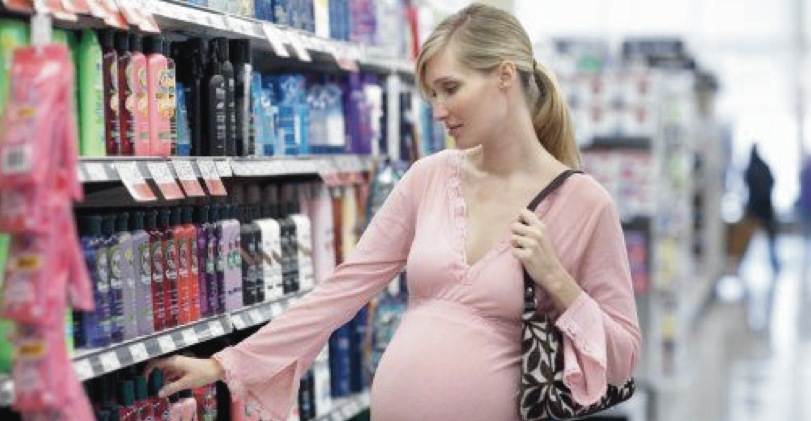
However, it behooves moms and their babies to also understand that healthy nutrients aren’t all that can transfer via breastmilk from mother to baby. What you eat, drink, or use for your bodycare during pregnancy and nursing can contaminate your breastmilk and expose your baby to risk. Florence Williams, acclaimed author of “Breasts,” wrote in a 2005 NYT article about how toxins can transfer from mother to baby via the breastmilk. Women in their child-bearing years may have unknowingly developed a “chemical burden,” or buildup of harmful compounds:

When we nurse our babies, we feed them not only the fats, sugars and proteins that fire their immune systems, metabolisms and cerebral synapses. We also feed them, albeit in minuscule amounts, paint thinners, dry-cleaning fluids, wood preservatives, toilet deodorizers, cosmetic additives, gasoline byproducts, rocket fuel, termite poisons, fungicides and flame retardants. -Williams

This should not discourage mothers who wish to breastfeed - but rather should make them more judicious about their exposure to chemical toxins during pregnancy and nursing. What you put into and onto your body counts in the pursuit of a healthy body for both you and your baby. Keep that truth in mind when selecting which products to incorporate into your skincare and haircare regimens.

Women should look after themselves during nursing as carefully as they do during pregnancy. Here are a few tips to accomplish just that, while avoiding exposure to toxins where possible:

  • Use chemical-free, natural products. Research and stick to beauty lines such as our very own Nine Naturals.
  • Read product labels closely. Learn how to recognize variations of harmful chemicals as phthalates and sulfates.
  • Eat organic. Make organic food choices that optimize your nutrient sources and minimize chemical exposure, like pesticides.
  • Steer clear of second hand smoke. You obviously know not to smoke at all while pregnant. Research also proves that cigarette and marijuana smoke can subject your infant to risk of SIDS and stunted growth and development.
  • Avoid synthetic fragrances. They’re riddled with toxins and can enter your body through your respiratory system and through your skin.
  • Inform your physician of any and all medications. From aspirin to acne cream, even the most innocuous medication can cause harm to your body and your baby’s body while nursing. Have a detailed discussion with your pediatrician and / or obstetrician to go over which meds are safest and which are risky.

Want to learn more about preparing for breastfeeding? Read our Top 5 Tips on how to Prepare for Breastfeeding and Top Breastfeeding Gear from Expert Lactation Consultant Sheridan Ross. Also checkout our Nine Ways to Reduce Your Toxic Burden During Pregnancy.

We wish you a wonderful experience with your newborn. As always, we encourage you to keep your body healthy through pregnancy, breastfeeding and beyond. Because taking care of yourself is the best thing you can do for your baby - especially during this special time in the baby’s development.

Things We’ve Read – Week of October 20th

Screen Shot 2013-10-27 at 11.50.37 AM

The Power of the Pregnant Body (Huffington Post): An inspiring tribute the physical prowess of our bodies even during pregnancy! Pregnant politicians, actresses, musicians and Olympians …

10 Advantages to an Unplanned Pregnancy (Jezebel): One woman in her tells the rapid maturity she experienced and the discoveries she made when she found herself unexpectedly pregnant in her early 30s.

Full Term Pregnancy Gets a New Narrower Definition (USA Today): A terminology change will help discourage doctors & patients from scheduling medically unnecessary deliveries before 39 weeks.

Exercise During Pregnancy Strengthens Arteries in Children (Counsel&Heal): CA State University studies show that exercise during pregnancy bolsters the vascular health of the baby from childhood through adulthood.

Creative Mom Turns her Baby’s Naptime Into Dream Adventures (Bored Panda): One mom creates beautiful scenes around her sleeping baby.


Boo! Skip the Spooky Makeup This Halloween

Similar to regular cosmetics, most traditional halloween make up kits are full of potentially harmful chemicals. Whether you are dressing up yourself or painting your little one, there is no reason to miss out on the halloween fun due to fear of chemicals! Nine Naturals has put together it’s top picks for safer, natural alternatives to traditional halloween makeup kits.

  1. Luminous Shimmer Eyeshadow in Meringue (Alima): Pearly white shade that’s perfect for angels, ghosts, the beautiful white swan of swan lake.
  2. Cream Eye Shadow in Mocha (RMS Beauty): Perfect for a smokey eye look worn by vampires & witches
  3. Limited Edition Nail Polish in Bowles Black (Priti Nail Polish): Witches, wizards, zombies, mummies - this limited edition sparkly black nailpolish is perfect for all costumes. Alternatively, if you aren’t planning on dressing up, it’s a great, subtle way to be in the Halloween spirit!
  4. Lip to Cheek in Diabolique (RMS Beauty): One of the top trends of this season, this dark burgundy lip is the perfect shade to create a dark, mysterious look.
  5. Mineral Lipstick in Electric Red (Inka): Vampire or Femme Fatale, possibilities are endless for this shade.
  6. Eyeliner in Black Caviar - (Inka): Exactly what you need to draw whiskers, create shadow for the nose, or make ghastly dark circles below the eyes.
  7. Multi Color Eye Shadows - (Dr. Hauschka): Blend natural eyeshadows in shades of deep blue, grey, and green to create realistic-looking bruises.

Have a fun Halloween!

All about Phthalates! Why and How to go Pthalate-Free.

Fotos-de-perfumes-color-naranja

Nine Naturals has mastered a few important things, not the least of which is pronouncing the word “phthalates.” We’ve taken great care to keep our products and packaging completely void of phthalates. We also stay current on science about phthalates so that we can keep our customers informed about how to avoid phthalates in their daily lives.

What are Phthalates?

Phthalates are a group of chemical compounds commonly found in household products, from children’s toys to plastic water bottles and from cleaning supplies to shampoo. It’s been estimated that approximately 70% of personal care products include these chemical compounds.

Phthalates are used to make plastics more flexible, transparent, durable and pliable. They also improve how well paint can be applied (as in your nail polish) and help scents linger in the air longer. Phthalates can also be found in medical tubing, pill encasements and IV bags.

Because of their widespread use by manufacturers in a number of industries, phthalates can prove very difficult to avoid.

Here is a quick list of products that commonly contain phthalates:

  • Shampoos and conditioners
  • Hair coloring products
  • Eyeliner / eyeshadow
  • Blush
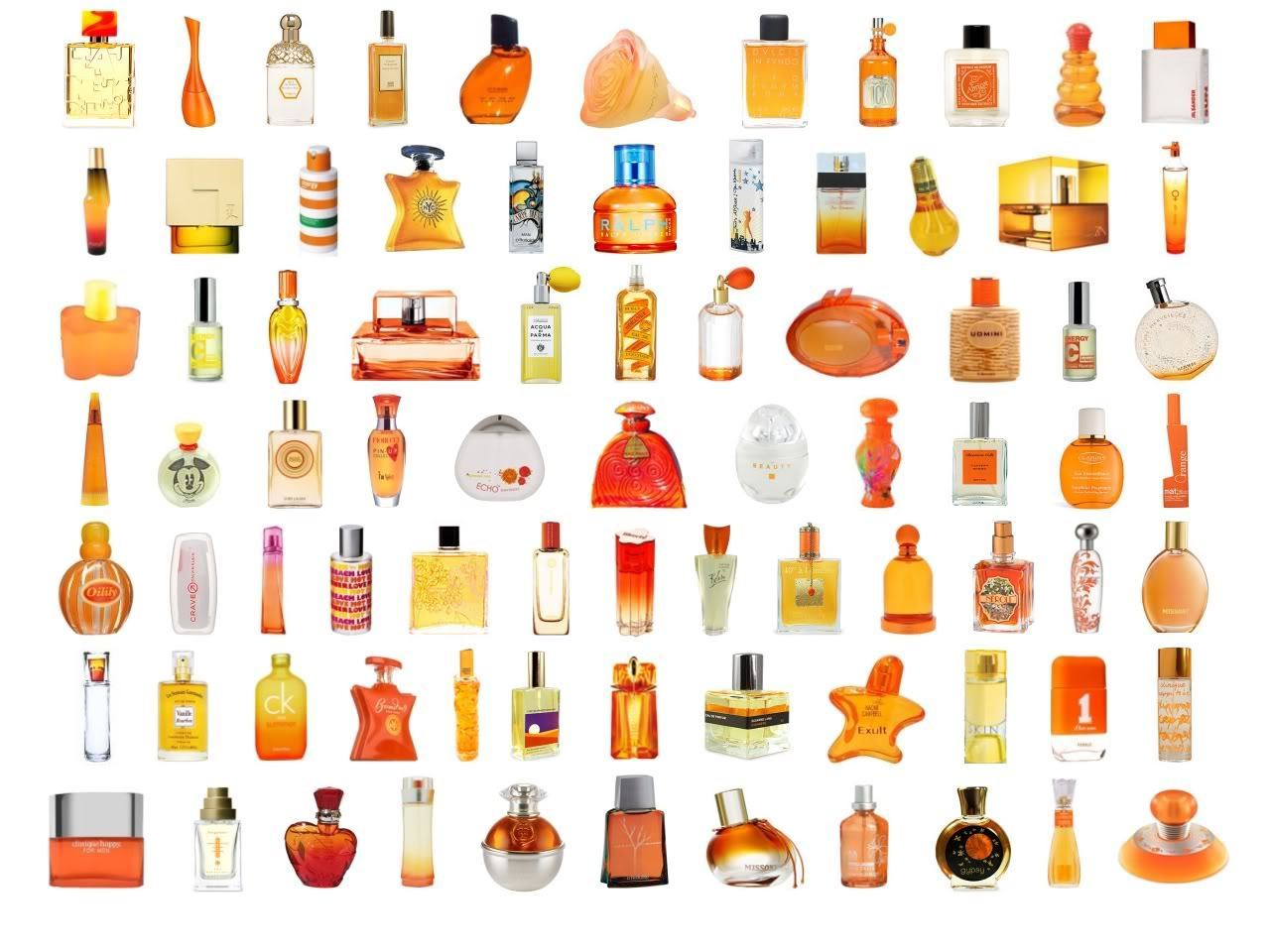
  • Perfume
  • Air freshener
  • Nail polish
  • Hairspray
  • Deodorant
  • Feminine products
  • Plastic food packaging
  • Plastic wrap
  • Plastic water bottles

Why Phthalates Are Dangerous.

One of the notable behaviors of phthalate compounds is that their decomposition accelerates as plastics age – this is one of the reasons that phthalates are so dangerous and nearly impossible to completely avoid.

Phthalates pose a very high risk to your health and to your baby’s well being. Potentially carcinogenic, phthalates can prove toxic to developing fetuses and can produce birth defects in baby boys.

Phthalates also interrupt your body’s natural hormonal processes – “hormone disruptors.” Phthalates can wreak havoc on your fertility levels, jeopardize your endocrine system, and can also incite endometriosis and PCOS, a serious ovarian disorder.

The good news about phthalates is that they do not accumulate in the body, unlike other harmful chemical compounds. Speaking unambiguously to the ubiquity of phthalates, a 2001 CDC study revealed that every single person in the study had phthalates in his or her body. Because women so often use products containing phthalates (like cosmetics), sustained exposure to these chemicals is high for females.

Women in their childbearing years and children hold the greatest risk of phthalates producing serious consequences to their health and their baby’s health. Research from the Columbia University Mailman School of Health correlated prenatal exposure to phthalates to several disorders in preschool-aged children: reduced mental development, motor skill deficiency and behavioral challenges. Women who unwittingly use products containing phthalates can jeopardize their children’s future.

How to Minimize Exposure to Phthalates

Identifying phthalates in your product’s ingredient list seems challenging and tedious. But here are a few tips to help you:

  1. Avoid all products from companies that list “fragrance” as an ingredient. In our blogpost about “How to Read a Label,” we explained that, due to patent guidelines, fragrances are legally protected from having to disclose contents. Phthalates are often used in creating fragrances, but are not disclosed as an ingredient because they are a part of the “fragrance” of a product. As an alternative, use products that, like Nine Naturals, only use natural, plant-derived fragrances.
  2. Seek out transparency on product labels. Purchase from companies who disclose all the ingredients contained in their products. Consumers shouldn’t have to guess what goes into the products they use on their body. For instance, Nine Naturals always discloses the exact fragrance of its products and never hides ingredients behind a “fragrance” label.
  3. Avoid products containing one of these acronyms: DBP, DEHP, DMP, or DEP. Also note that “dibutyl / diethyl ester,” or any variation thereof, signals phthalates. So does “1,2-benzenedicarboxylate.”
  4. Use glass containers to store food. Phase out that plastic Tupperware! And promptly throw away Tupperware that is already showing scratches and other signs of damage.
  5. Never use plastic containers or plastic coverings, like plastic wrap, when heating food. Heat can accelerate the breakdown of phthalates in plastic. Transfer your food to a glass bowl or plate and use a paper towel or a plate as a cover.

A Natural Solution

Keep in mind – natural hair maintenance offers more than phthalate-free, chemical-free safety; it also fosters sensational hair. Pregnant women who use plant-based, natural products can capitalize on their fuller locks without worry.

Mother Nature helps achieve this with stunning “ingredients” like cupuaçu butter, which nourishes hair with its Omega-6 and -9 fatty acids. Meadowfoam seed oil naturally protects hair against UV radiation. And impressive shine is just one asset of the oil from the sweet almond. Nine Naturals’ phthalate-free, all-organic shampoo and conditioner incorporate these and other healthy-body, healthy-hair ingredients.

This is Your Brain on Toxins: How Chemical Companies Are Threatening the Health of Our Children

Screen Shot 2013-10-20 at 12.40.21 PM

In a recent NYTimes op-ed, Nicholas Kristof likens the health threat from the chemical industry to the health threat of the lead industry and of the tobacco industry. He identifies several points of similarity:

  • Insidiousness of the threat – chemicals hidden in seemingly innocuous products like cosmetics and household cleaners
  • Enormity of the industry lobby to minimize regulation and defend profits, not consumers
  • Journalists behaving like lapdogs, not watchdogs
  • Scientifcally identified extent of harm these chemicals pose to our health

Just as the lead industry hoodwinked consumers into blind complacency before America finally wised up to its dangers, scores of scientists believe we are living through a similarly dangerous moment, the threat posed this time by endocrine-disruptor chemicals.

These harmful compounds are found in virtually every product – from cosmetics and plastics to toys and some furniture. Yet the fight to eradicate these chemicals has not gained nearly enough traction. Big chemical companies have yet to encounter more than an occasional attack against their harmful practices.

Arguably the most noteworthy counter-attack to the chemical industry took place last year, when the Chicago Tribune exposed the truth on flame retardants in furniture, especially in baby crib mattresses. (They pose a serious threat to our children’s health and don’t actually expel flames. Check out our summary of the major exposé here.)

Another significant push against chemical companies’ use of endocrine disruptors occurred with the angry-letter writing campaign this summer, in which noted scientific experts participated. Just what got these scientists riled up, and why should it anger you as well?

Bottom line: endocrine-disrupting chemicals could prove as detrimental to health as lead. Developing fetuses and children face particularly troubling risk from these chemicals. Do more than eat organic and avoid plastic water bottles. Fight to change regulation to force an end to the use of these chemicals. (NY Times)

Things We’ve Read - Week of October 13th

Bigger Postpartum Challenges Than Just Baby Weight (WSJ): An increasing number of women and health professionals are turning their attention to post pregnancy changes beyond weight to stretched, weakened or torn muscles, misaligned bones and more.

BPA, phthalate exposure may cause fertility problems (CNN): Great article explaining what BPA & Phthalates are & how they impact your health & fertility.

Popular Morning Sickness Drug Safe in Pregnancy, Study Finds (USHealthnews): Studies have found that metoclopramide, a popular anti-nausea drug, appears to be a safe and effective treatment for morning sickness

Everything You Need For a Halloween Baby Shower (Babble): Halloween is just around the corner. Here are some fun ways to incorporate the holiday into your baby shower!

Your Baby’s first 24 hours of Life (Parents Magazine): You read and research what your and your partner’s experience will be on your delivery day. Do you know what the experience will be like for your newborn?

A little Bit Pregnant: The Numbers Game (NYTimes): The next edition to Amy Klein’s IVF series explains how positive pregnancy test results for pregnancy do not tell the full story.

Spruce Up Your Nursing Style This Fall with Emily Hsu of Au Lait!

Finding tops that make breastfeeding easy, but don’t compromise on style are almost impossible to find…until now. Enter Emily Hsu, founder and president of Au Lait, a NYC-based nursing wear line that offers fashionable tops catering to the needs of the breastfeeding mother. Emily believes that although comfort is important, it should not come at the expense of looking your best. We sat down with Emily who gave us her fall fashion tips and styled 3 inspiring looks for the busy, nursing mom on-the-go!

Emily: Fall is my favorite season of the year and if you are like me, I try to spend as much time outdoors as possible before winter strikes. When you are breastfeeding, trying to figure out what to wear is probably the last thing you want to worry about! Here is my Fall style guide for nursing mothers:

Look 1: Casual/Weekend

look1

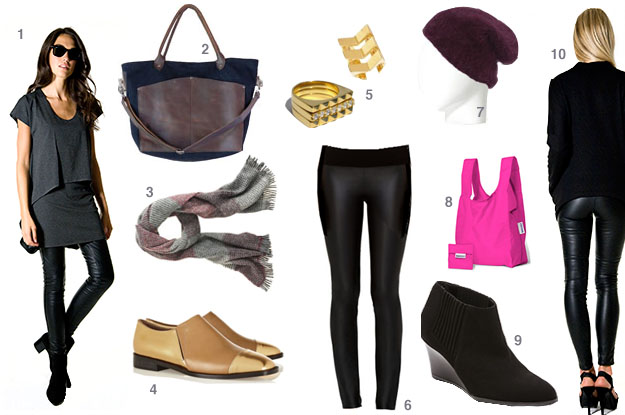
Credit: The Tee Dress in Charcoal (Au Lait Shop), Waxed Canvas + Leather Diaper Bag (LocknKeyLeathers), Grid Pattern Scarf (J.Crew), Metallic Leather Loafers (Marni), Rings by TOMTOM Jewelry - (TOMTOM), Night Out Legging (Hatch Collection), Knitted Hat ( Zara), Baby Baggu in Magenta (Baggu), Nora Wedge Boots (L.K. Bennet), The Pullover Cardi (Au Lait Shop)

Weekends are really about being comfortable while still remaining stylish. This sounds easy but we know how hard it is to even think about looking stylish when you are nursing.

I recommend starting with the Au Lait Tee-dress, which can be worn alone or as a long top, pairing it with leather leggings, and a wine-colored knit cap that seems to be everywhere this season (you can’t drink, might as well infuse a little bit of wine somewhere~)! Wedges are red-hot and back in the game so throw away those uncomfortable heels - just a tiny bit of wedge gives you an instant lift and it actually helps you re-build your core. Throw a baby Baggu into your diaper bag just because it has saved me so many times when I needed to carry soiled baby clothes home! Punk is still very much alive so a couple pieces of punk-inspired jewelry rounds out the perfect casual look.

Look 2: Business/Work

look2

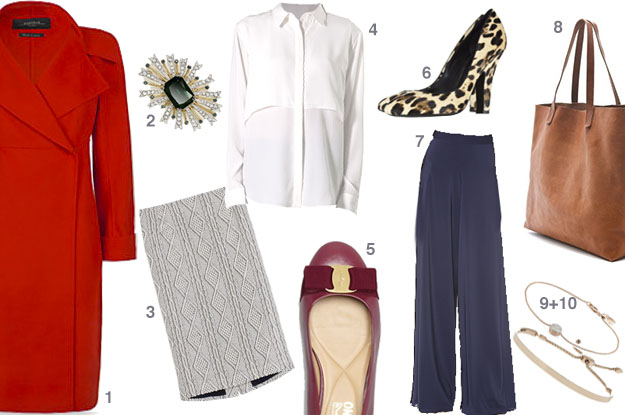
Credit: Red Coat (Weekend by Max Mara), Sunburst Stone Pin (Carolee), Cable Skirt (Tibi New York), The Blouse in White (Au Lait Shop) , Ballet Flats in Varina ( Salvatore Ferragamo), Leopard Print Pumps (Dolce & Gabbana), Super Flared Wide Leg Pants (Alice + Olivia), Transport Tote (Madewell), Rose gold-plated diamond bracelet & Fiji rose gold-plated bracelet (Monica Vinader)

If you pump at work, I recommend starting with a good nursing blouse tucked into a textured skirt or a pair of menswear-inspired trousers. Most moms stop wearing jewelry once they have a baby, but brooches are an easy (and cheap) way to make a statement and it comes right off with your coat or cardigan so you can cuddle with your little one the second you step home. Add a bit of flair with some leopard print chunky heels (stylish but comfortable!) but toss the sneakers on the walk to the subway and slip into a classic pair of ballet flats instead. Pump-at-work moms need to choose their bags carefully and this chic tote not only looks professional but is big enough to hold your pump and ice pack.

Look 3: Dressy/Formal

look3

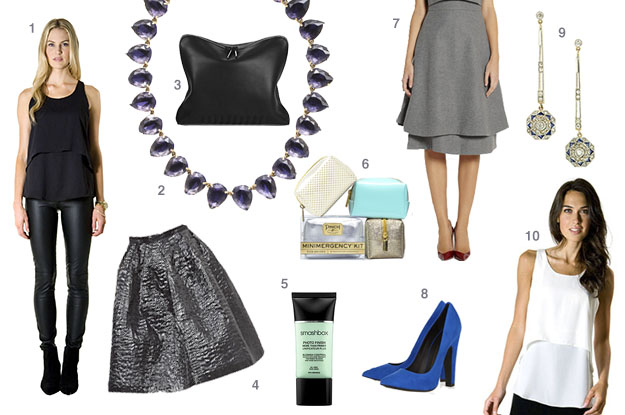
Credit: Tank in Black (Au Lait Shop), Petite Pear Necklace (J. Crew), 3.1 Phillip Lim Ryder 31 Minute Medium Clutch (Phillip Lim), House of Holland Full Skirt in Oilslick (ASOS), Smashbox Photo Finish More Than Primer Blemish Control (Smashbox), Pinch Minimergency Kit (Pinch), Layered wool-felt skirt (Vika Gazinskaya), Ester Suede Pumps ( Giuseppe Zanotti), Vintage Diamond & Sapphire Drop Earrings (Doyle & Doyle), The Tank in Ivory (Au Lait Shop)

The last thing you want to spend money on is an evening dress that you will end up wearing only once and let’s not even talk about the logistics of trying to pump/express milk in a gown in a public place! Good thing full lady-like skirts are back in vogue and nursing moms don’t have to struggle to find a dress to look dinner party ready. I recommend you start with the Au Lait nursing tank that is versatile enough to take your look from day to night. A statement necklace will help dress up the neck line and add a pop to your lady-like outfit with a dash of blue! The chunky heels provide extra balance and ensure your enjoyment on your precious night out. Breastfeeding might throw your hormones all out of whack, so a primer with some salicylic acid (breastfeeeding compatible and Paula’s Choice approved!) will keep any flareups at bay. We picked this specific clutch because it is rare that an evening clutch can hold so much so go ahead and toss a mini emergency kit in there because you just never know.

Emily is the founder and president of Au Lait, a NYC-based nursing wear line that offers fashionable tops that cater to the needs of the breastfeeding mother. Utilizing her knowledge in fabrics and garment construction, Emily decided to solve the two biggest issues with nursing and breastfeeding tops: privacy for the nursing mother and designs that avoid the drab look that nursing tops feature today. Although comfort is important, it should not come at the expense of looking your best. Au Lait features brand new feeding systems that offer both easy access as well as privacy for the nursing mother.

Since giving birth to baby Avery in 2012, Emily has been a work-from-home mom consulting in the fashion industry and creating Au Lait.

How to Read a Label? Standards, Labeling, Honesty & Deception on Product Labels

Screen Shot 2013-10-16 at 4.17.13 PM

Water. That’s the one word you probably recognize on a beauty label. The rest of the ingredients in beauty and cosmetic products, including even the natural ones, have complicated names – scientific names that are long, unwieldy and barely decipherable in pronunciation or meaning. This can be a unsettling problem, especially as a pregnant woman or new mom who wants to be careful of the ingredients she uses on her skin.

The very complicated task of reading a label is a direct effect of the INCI’s (International Nomenclature of Cosmetic Ingredients) standards for cosmetic products worldwide, which specifies what and how certain information must be conveyed to the consumer through cosmetic labels. Although the wording can be challenging, INCI’s system provides a consistency that ultimately helps the consumer:

  • Ingredients must be listed by weight, from the greatest to the least amount inside the bottle.
  • Manufacturers’ ingredients must fit into 1 of 35 INCI categories, such as emulsifiers, deodorants, and preservatives, simplifying the consumer’s process of identifying and evaluating product and their ingredients.
  • Labels must list the INCI (basically, universal) name for a product. For example, Vitamin E must be represented as Tocopherol.

Providing additional support to the consumer, the FDA also regulates cosmetic product labeling in the US via its thorough Cosmetic Labeling Manual. Their Labeling Claims site lets consumers pursue action against products that have been “misbranded,” or improperly labeled.

Important to note: These standards for labeling should not be confused with cosmetic product regulation. In spite of the many chemicals that appear in cosmetics, the FDA has limited regulations around the ingredients NOT pre-approve labeling before a product reaches consumers. The FDA does NOT strictly regulate the cosmetics industry in the way it regulates the drug industry.

This is one of the many reasons it is so important to know how to read your product labels.

Here are a few deceptive words on product labeling:

Fragrance: Manufacturers are not required to disclose the ingredients of fragrances, as this information is legally considered a trade secret (which companies are granted the right to protect). This is particularly dangerous, because fragrances abound with synthetic chemical compounds, such as allergens, phthalates, and neurotoxins. To guard against this, seek out brands like Nine Naturals that use only plant-based essential oils for fragrance and fully disclose the ingredients in those fragrances.

Natural: This is a marketing word - not a scientific label. The FDA requires only one natural ingredient to be present for an entire product to be labeled “natural.” This means that a company can include one natural ingredient amongst multiple harmful chemical ingredients and still call the product natural. How to protect yourself? Spend time studying ingredient listings on products.

USDA Certified Organic: Product labels that feature this term are manufactured by operators who comply with annual inspections, as well as random checks, to ensure their adherence to USDA’s organic standards; this includes, among many things, a three-year process to properly fortify the farmland. It’s also important to note that many farmers that do adhere to “organic” standards cannot afford the fee to apply the “organic” label to their products.

Here are a few permutations of the USDA’s “organic” label:

    • 100 percent organic: Product must contain (excluding water and salt) only organically produced ingredients. Products may display the USDA Organic Seal and must display the certifying agent’s name and address.
    • Organic: Product must contain at least 95 percent organically produced ingredients (excluding water and salt). Remaining product ingredients must consist of nonagricultural substances approved on the National List or non-organically produced agricultural products that are not commercially available in organic form, also on the National List. Products may display the USDA Organic Seal and must display the certifying agent’s name and address.
    • Made with more organic ingredients: Products contain at least 70 percent organic ingredients and product label can list up to three of the organic ingredients or “food” groups on the principal display panel. For example, body lotion made with at least 70 percent organic ingredients (excluding water and salt) and only organic herbs may be labeled either “body lotion made with organic lavender, rosemary, and chamomile,” or “body lotion made with organic herbs.” Products may not display the USDA Organic Seal and must display the certifying agent’s name and address.

Nine Naturals believes that intentionally vague labeling isn’t fair to consumers, nor is it a healthy or sustainable way of marketing and talking about our products. All of our products’ ingredients are 100% naturally derived and plant-based. Though we’d like the labeling to reflect this simple and important company standard, we are required to include the lengthy INCI name of each ingredient on our product packaging.

Nine Naturals also provides an Ingredient Glossary, which clearly defines each ingredient we use and its beauty benefits to you so that you can understand exactly what goes into our products and onto your hair and body.

What frustrates you about product labeling? How do you shop for cosmetics and beauty products while avoiding the ingredients you dislike?

Things We’ve Read – Week of October 6th

Screen Shot 2013-10-13 at 11.47.56 AM

You’re a Stay-At-Home Mom? What do you DO all day? (The Matt Walsh Blog): A husband defends the value of the work that mothers do in caring for their families.

Breakthroughs in Screening (NYTimes): A new minimally invasive prenatal test yields extremely accurate results using fetal genetic fragments found in the mother’s blood

To Medicate or Not Medicate (The Huffington Post): For moms-to-be managing anxiety/depression medication (or non-medication) during pregnancy, this article offers 6 helpful cognitive-behavioral therapy tools.

After the I.V.F., the Wait (NYTimes): Amy Klein describes the two week wait after her first IVF.

Sean Penn Film ‘Human Experiment’ Explores Potential Dangers of Toxic Chemicals in Household Products (ABC NEWS): In his new filmm Sean Penn is taking on the risk of exposures to environmental toxins in what were once considered innocuous.

To Buy Or Not To Buy - Renting Maternity Clothes With Krystal Stubbendeck Of Borrow For Your Bump

Group Pic

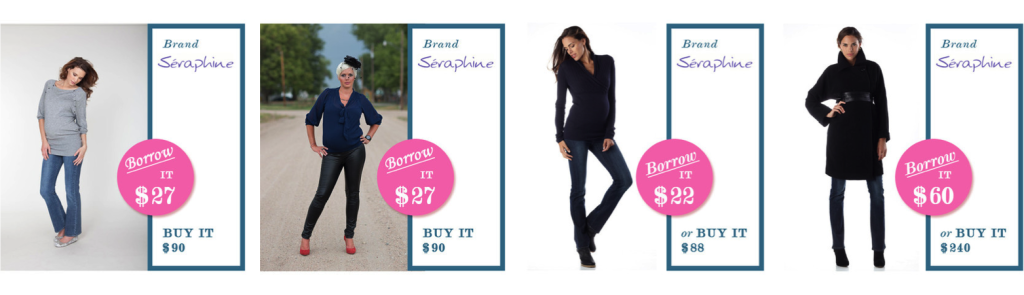
Buying maternity cloths that you are only able to wear for nine months can get pricy. We continue our look at maternity fashion (see Susan Cho’s picks for Maternity Fall Fashion Must Haves) and sat down with Krystal Stubbendeck, founder of Borrow For Your Bump, to discuss the benefits of renting maternity fashion versus buying.

NN: What inspired you to create borrow for your bump?

KS: As many of my friends became pregnant, they all had the same complaint: why spend money on maternity clothes that you will only wear for a few months. These once style conscious women were resorting to baggy, larger non-maternity sizes to get by. They all wanted to wear the same designer denim they enjoyed before becoming pregnant but just didn’t want to pay the price. They all seemed to think that the cute, stylish maternity clothes were too expensive.

NN: What would you say are the main advantages of renting vs buying maternity wear?

KS: Renting items like dresses, jeans, outerwear, blazers, skirts…it just makes sense. For the same cost of buying a pair of designer jeans at $200, you can rent the jeans, and a pea coat, and a blouse, AND a dress! The best part is you send it all back after a month and get a whole new wardrobe! Of course, there are maternity items we recommend buying, like basic tees & tanks, leggings, and more casual items that will be worn often.

NN: What feedback have you heard from pregnant women on the rental service?

KS: The feedback has been amazing. Many women who rent say they will tell all their expecting friends. That’s what we love to hear and we love getting customers via word-of-mouth. We also love when a customer emails us to let us know how many compliments they received in a dress they rented. It feels good making these women feel beautiful. They deserve it!

NN: What’s the most popular rental item you are seeing for pregnant women?

KS: Dresses!!! They are definitely our most popular item being rented, especially more formal options. Next, it’s probably denim.

Here are Krystal’s top maternity wear rental picks:

Group

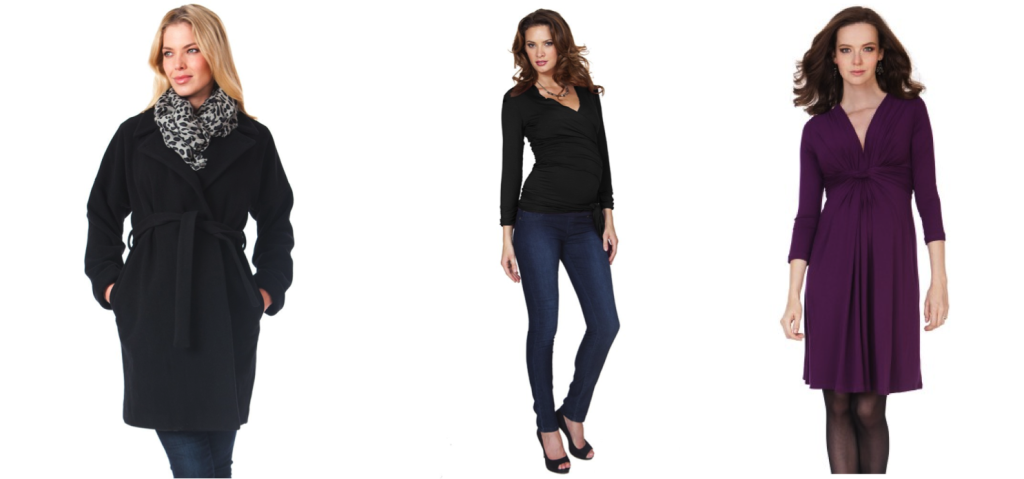
1. Outerwear: As we approach winter, dressing in layers is key (to combat crazy hormones which create wacky body temperatures). We definitely recommend renting a quality piece of outerwear, whether it’s a trendy cape or a classy pea coat.

2. Jeans: A go-to pair of jeans, whether they are skinny or bootcut, are a necessity during the fall and winter months. We love the grey denim this season! Dress them up with a blazer for a casual work-day or heels and sexy blouse for a date night.

3. Dresses: Our most popular rental item! This emerald colored dress is flattering on many skin types and hair colors. Paired best with other jewel tones (like sapphire and amethyst), this dress is perfect for the office (just paired with a blazer), date night or holiday party. Dress will be available on Borrow For Your Bump soon!