


The Pregnancy and Newborn magazine Buyer’s Guide is a must-read for all moms-to-be. We’re thrilled that Nine Naturals is featured as their choice for 100% plant-based haircare for pregnancy! You can find the guide on shelves now!
Archive for August, 2013
Things We’ve Read - Week of August 18th
Is There Danger Lurking in Your Lipstick?: Deborah Bluhm from NYTimes addresses the Boston University study which shows that in addition to lead, many metals exist in lipstick. What does the FDA say? Should people change their lipstick habits?
BPA, phthalates tied to kids’ weight, diabetes risk: Reuters’ Genevra Pittman covers a NYU and University of Michigan studies linking obesity in children to BPAs found in packaging for their food. The contributors clarify that the studies are based on urine samples, though blood-level analysis is required to prove that BPAs affect weight in children.
Another freaky side to infertility: Rodale’s Leah Zerbe shares infertility statistics as well as statistics about BPAs which show connections between the two. The article also features helpful tips on how to avoid BPAs.
Top 5 Natural Remedies During Pregnancy: offers helpful advice for the pains that ail pregnant women. Like fennel seed tea for heartburn!
The Re-education of My Perineum: Ruth Foxe Blader from the NYTimes sheds light on a good reason to keep seeing your midwife after you’ve given birth. And some helpful suggestions about how to get your perineal area back in tact and in shape in a health way.
Top Breastfeeding Gear from Expert Lactation Consultant, Sheridan Ross
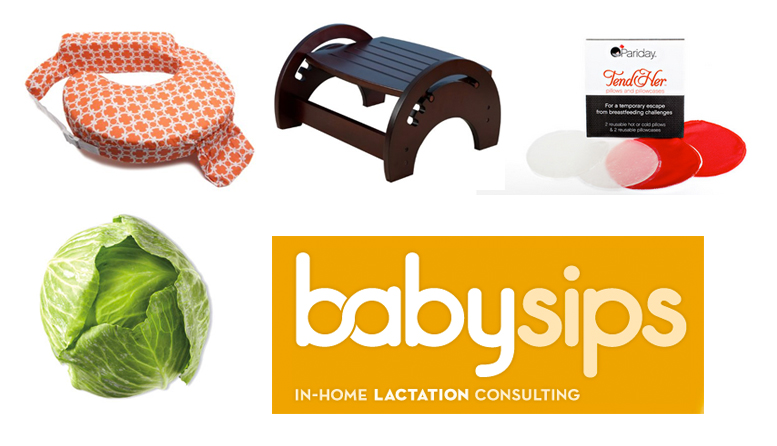
As part of Breastfeeding Awareness Month, we sat down with expert lactation consultant, Sheridan Ross of Baby Sips, to learn more about what breastfeeding gear to purchase ahead of the baby arriving. There are great products out there that will help to make breastfeeding a smoother and more comfortable - especially in the beginning as you’re just getting a handle on it. Here are Sheridan’s recommendations for Top Breastfeeding Gear to purchase before the baby arrives:
- Mommy’s comfort is imperative! That doesn’t mean go out and buy a giant glider, though. Move around your home and see what you’ve already got “in stock”. What use to qualify was your cushy recliner, but with a newborn and donut pillow it might be the last thing you want to sit on while breastfeeding. Not too deep, not too soft, not too narrow (I sound like Goldilocks). You need to be able to relax but be supported and comfortable. Locate that place before you bring home your baby so you know where to go when it’s time to feed. As you get into a rhythm with nursing, these might change.
- Nursing Pillows. I’m a huge fan of the My Brest Friend. It gives fantastic lumbar support and gets up nice and close to you. Firm pillow top allows you to use more pillow support and less upper body strength when nursing.
- Nursing Foot Stool. This might seem like a frivolous purchase, but I promise you, the ottoman from the front room will not work. The nursing stool is just a few inches off the ground, usually at the correct angle for your feet and it’s wonderful. It brings your lower back into a neutral position (no back aches, no strain), knees come up a little offering additional support under your MBF pillow. I’ve seen it make a huge difference for many nursing mommas.
- Pariday TendHer Pillows. These are the greatest things since sliced bread. Filled with a non-toxic vegetarian food-based gel inside a deliciously soft safe plastic pouch (BPA + phthalate free), they last for FOUR WEEKS. Not 72 hours. Not 6 days. 4 weeks. And they maintain their “feel good” status the entire time. Use them warm, cold, room temp – it all works. That means less waste and multiple uses! Sore nipples, inflamed areola, plugged ducts, plugged nipple pores, engorgement, headache, cramps, early teething comfort, boo-boos, and more. They come with pillowcases to help wick away milk and prevent leaking on clothing. Once you hold them in your hand they’re hard to put down.
- Green Cabbage for engorgement. You don’t eat it; you WEAR it. Here’s how to use it properly:
- Buy a head of common green cabbage.
- Remove the core and carefully peel individual leaves from the head of cabbage.
- Wash the leaves, pat them dry, and pop them into the fridge – cooling provides more comfort.
- Choose your leaves and roll them with a rolling pin (or a similar object) to break up the fibers.
- Gently place the leaves around the engorgement of your breast (not the areola or nipple), and possibly up into the swollen area under your arms; and wear a light supportive bra (no underwire!) for at least one hour. By this time the leaves should be wilted.
- Discard the wilted leaves.
- Repeat the process every 4-6 hours until the engorgement subsides.
You might feel like a walking salad but it’s better than feeling like a walking zombie!
Why Cabbage? Cabbage has a natural anti-inflammatory effect when used for a short period of time; however, it should not impact your supply if you’re constantly removing milk by nursing or pumping. When using cabbage for an extended period of time, without milk removal or breast stimulation, it can impact your milk supply – consider it a good tool again when you’re ready to wean.
If the road starts to get bumpy, then call for support. If you’re having pain from the start, call for support. If you’re a first time mommy or this is your seventh child, this new baby has never nursed before so be patient while you figure it out together. There’s a bit of a learning curve so have your “village” help with the house, laundry, and cooking, and call your IBCLC. You won’t be sorry.
Want to learn more about breastfeeding? Read Sheridan’s Top Five Tips on How to Prepare for Breastfeeding.
Sheridan Ross is a skilled and compassionate lactation consultant who provides counseling, education and support to moms at every stage. Sheridan is internationally board certified and received her education from UC San Diego and Health e-Learning’s Breast-Ed Series from Australia. She is a member of ILCA (International Lactation Consultants Association), USLCA (United States Lactation Consultants Association), and BALA (Bay Area Lactation Association).
Sheridan has worked as a lactation consultant at Healthy Horizon’s Breastfeeding Center, at the Family Birth Center in Mills-Peninsula Hospital, and is on staff at Bay Area Fertility & Pregnancy Specialists and Pediatrics. She regularly teaches breastfeeding classes, infant massage classes, and hosts support groups. Sheridan’s commitment to infant health and wellbeing extends to her additional roles as a labor doula, certified massage therapist with a focus on prenatal massage, and as a certified instructor of infant massage. For more information, please go to: www.babysips.com or 650-BABYSIPs (650-222-9747).
Q&A with Jessa Blades, founder of Blades Natural Beauty
On Wednesday, August 21st, Jessa Blades, founder of Blades Natural Beauty, will join us on Facebook for a Q&A & Giveaway on GREENING your Beauty Routine. Jessa is the Founder of Blades Natural Beauty, which is a shop and blog for natural products for skincare, makeup and wellness.
NN: What would you say are the main advantages of natural vs more conventional skincare? What are the risks of more conventional options in the skincare market these days?
JB: The advantages of natural skincare is that it is better for the overall health of your skin and it will make your skin happier, healthier and give you that elusive glow that everyone always asks me for . Conventional skincare products can work and sometimes they can work well. But mostly only in the short term. I’m more excited about supporting smaller companies, using good ingredients and voting with my dollar, to show the beauty industry that we are ready for change and want healthier, non-toxic products on the shelves.
NN: Tell us about your work as a natural makeup artist and Blades Natural Beauty. What inspired you to explore the all-natural beauty and skincare space?
JB: As a makeup artist, with a background in art and psychology, I’ve always been fascinated by the power of beauty and my mission has always been to help women feel good through looking good.
I started out working in the fashion world, collaborating on set with talented creatives, models and celebrities, working to make beautiful images. The other side what I did was working with real woman, teaching them how to do their makeup or transforming them on their wedding day or for a special event. I began incorporating natural products into my makeup kit about five years ago. It all started with a personal mission to heal my own skin, and natural products were my last attempt after trying everything that the allergists and dermatologists had recommended. It was a lot of trial and error and self education and once I was done I realized that even as an makeup artist, I had a so much to learn and had no idea that there were toxic chemicals in my beauty products. It struck me if as an expert that I didn’t know this, the average woman must not know either.
My journey to heal my skin and understand how to truly help others led me to study herbal medicine. Through this education I’ve learned many simple, time tested ways to heal the body and skin, allowing me to help my clients make long lasting changes for their overall wellness. The mission for my company is to help woman look and feel like the best version of themselves, using the best products available. I do this by teaching classes and educating about natural beauty. This journey also inspired me to start my own product line of natural skincare and teas as well as start an online store, making it easy to find healthy products that work well. There are so many choices on the market today and it can all be so confusing, and we are all so busy don’t have time to do tons of research. That is why I love having a store and sharing the amazing my products that I find. I do all the work and my customers get to have a resource that they can trust.
NN: You talk about your love of herbs and plant medicines. Give us some highlights – what are some of the herbs and plants that make for great makeup and skincare?
JB: I do love plants! I really love using herbs and plants for myself and my clients. Some of my favorite plant based ingredients are aloe, calendula, and rose.
All of them are really soothing, nourishing and healing to the skin. And the best thing we can do for our skin is to eat more plants, thinking of our food as our medicine. Eating as much local and organic food as possible. Eating local raw honey, seaweed, garlic are good foods to start with, and in general eating nutritious food versus supplements and vitamins is a really good place to start in your journey to healthy skin.
NN: Some women are still reluctant to making the switch to natural beauty products. The switch to natural sometimes takes more research, more effort, more expense. What advice would you offer them?
JB: I would agree with them that it is a hard transition. The best advice I can offer is to start slow and make baby steps when it comes to making changes. It is good for them to focus on changing the products that they use once or twice a day.
Simply start by changing these products first. The next advice is to just be curious. To open themselves up to the idea that because there is no regulation for ingredients in beauty products, that they need to arm themselves with a list of ingredients to avoid, and start flipping products over and reading labels. Being able to pronounce ingredients is always good and so is choosing products with less ingredients, avoiding fragrance and dye colorings. And then find companies with great stories that they can trust. There are a lot of talented people out there making great products with awesome ingredients, like Nine Naturals, Revolution Organics and of course mine, from Blades Natural Beauty.
NN: In addition to providing skincare and beauty products, you also have a blend of hand-selected teas! What’s the relationship in these somewhat different products?
JB: The really great thing about my tea blends, and herbal tea in general, is that it is enjoyable to drink and an addtional way to bring wellness into your every day life. Herbal teas can help your body function better and heal, and they taste really good. Most of my clients are super stressed out and as a result their skin and overall wellbeing is suffering. Having them drink tea on a daily basis is a great way to help them deal with their stress.
NN: You’re an expert in the natural skincare space. Think about the clients you have who are pregnant – what advice to you have for them about the importance of all-natural skincare and haircare? What advice do you have for them after the baby is born?
JB: My advice for pregnant woman and new moms is to try to be as natural as possible with your beauty routine and to remember that your skin is your largest organ. It is important to consider the products that you are using all the time, but especially when you are pregnant and nursing. It is also important to be aware of and avoid fragrance and inhaling synthetic ingredients during this sensitive time. If you are going to use nail polish or fragrance, make sure to do it outside or in a well ventilated area, because these ingredients can get into you body by inhalation.
My other advice for new mom’s is to consider that their whole body is connected, so if you are nursing, don’t use conventional deodorant. Your breast tissue is connected and very close to your underarm area. Avoid deodorant all together or if you are going to use it, make sure you are using one that is non-toxic.
NN: What’s your favorite Nine Naturals product?
JB: I really can’t get enough of the Body Butter!
Q&A with Revolution Organics’ Founder Melissa Shabinsky
On Wednesday, August 21st, Melissa Shabinsky, founder of Revolution Organics, will join us on Facebook for a Q&A & Giveaway on GREENING your Beauty Routine. Nine Naturals sat down with Melissa to learn more about Revolution Organics and her perspective on green beauty. Melissa has been a longtime expert and entrepreneur in the beauty space and, along with Alexandra Zanella, she founded Revolution Organics in 2008.
NN: What was the inspiration behind Revolution Organics? Why did you decide to launch Revolution Organics?
MS: We really wanted to create a brand that was both green and glam – products that performed but that we healthy, safe and gorgeous, naturally.
7 years ago when we started looking for more natural beauty products to replace our favourites, they just didn’t exist, or were found at the back of the health food store. When we started working with our labs, we really pushed them to get the colors and performance we wanted since we knew that our products would have to work just as well as the ones made of chemicals, or our customers, like us, just wouldn’t be happy to make the switch.
NN: Tell us about the choice of words – why did you name your line “REVOLUTION” Organics? What is revolutionary?
MS: When we started out, we said to ourselves – ‘let’s really revolutionize the eco beauty space’ – it was like a lightbulb when we said that – so it was only fitting to call the brand REVOLUTION. It is revolutionary because we have been able to make healthy, green products that can stand next to any conventional product, and work!
NN: You have a very strong background in the beauty industry. What lessons did you take from your previous companies? What aspects of the beauty industry does Revolution organics improve upon?
MS: We have both worked in the industry for many years with different brands and I think what we have found is that we try and not get caught up in the ‘product of the moment’ – instead we look to what we, or women like us, want to use and how they want to use it. Multitasking products were very important to us since we both found that we used only a few products and found better ways to use them. We were putting our lipstick on our cheeks as a cream blush…so we created Freedom Glow Beauty Balm to do the same…we were using our lip balm as a moisturizer and a brow tamer…so we created our 22+ Uses All Over Body Balm. We really try and think outside of the makeup bag!
NN: What sets Revolution Organics apart from other cosmetic lines that also claim to be all-natural?
MS: There is no grey in our green – We are very open and honest about what is inside, how it works and what it is Free Of (hence the Freedom name to our Freedom Glow and Freedom Gloss). We also maintain the highest level of organic integrity and use only USDA organic ingredients. Our packaging also stands us apart– we wanted packaging with ‘pop’ that didn’t scream green, but was still eco, ethical and sustainable.
NN: Tell us about some of the products you use! We’d love to know a few highlight ingredients and what they do
MS: The 22+ All Over Body Balm was our first product and continues to be a best-seller. It is easy, handy, travel-friendly and family friendly. Our Freedom Glow in Blushed gives that ‘just be for a jog glow’ (who doesn’t love that look??) and for me, our Freedom Gloss in Innocent right now since it is the perfect nude and since it is made with organic oils, it is truly a lip treatment, gloss and color in one.
NN: Would you say you had a personal “natural awakening?” Tell us about it
MS: For me, it started with food and once I started making healthier food choices (gluten-free, dairy-free, less processed foods) my entire skin changed. Beauty does really start from the inside-out. Same thing for your skin – once you start feeding your skin nourishing oils and butters, you’ll see the difference immediately!
NN: What tips do you have for women who are going through a “natural awakening” just beginning to adopt an all-natural beauty regimen? How do you recommend they ease in?
MS: Everyone has their own shade of green. Start by replacing 1 or 2 products, like a lip product (you end up eating it, right?) but the more you try, the more you will find that you really don’t have to compromise on anything to swap our your products to greener versions. Body washes and shampoos were important for me to swap our for my family, and since they are all toxic free, they are nourishing, moisturizing and non-drying. If anything, you’ll wonder what took you so long!
NN: Think about the clients you have who are pregnant – what advice to you have for them about the importance of all-natural skincare and haircare? What advice do you have for them after the baby is born?
MS: Your skin is your largest organ and can absorb what you put on it so, especially during pregnancy, it is important to make toxic-free choices for both you and your baby.
NN: What’s your most popular product among customers?
MS: Our 22+ All Over Body Balm (great for stretch marks!) and our Freedom Glow Beauty Balm which can be used on eyes, lips, face.
NN: What’s next for Revolution Organics? What can customers look forward to in Q4-2013 and early 2014?
MS: We are ‘underground’ right now working on an amazing new collection of products for 2014 and can’t wait to share the next evolution of the revolution!
NN: What is your favorite Nine Naturals product?
MS: We absolutely LOVE the Vanilla + Geranium Belly Butter (and we don’t just use on our bellies) – smells divine!
Things We’ve Read - Week of August 12th
- The Very Public Post-Baby Body Reveal, Explored by Charlotte Cowles, New York Magazine
- How Long Can You Wait to Have a Baby? by Jean Twenge, The Atlantic
- Companion articles Take Back Your Pregnancy by Professor Emily Oster, Wallstreet Journal, and New York Magazine’s follow-up Q&A: The Woman Who Is Rewriting the Rules of Pregnancy by Erica Schwiegershausen. Emily Oster is the author of Expecting Better: Why the Convetional Pregnancy Wisdom is Wrong and What you Really Need to Know
- A Year of Breast-feeding by Sophie Egan, New York Times
- In God’s Name, or Baby ‘Messiah,’ Competing Claims of Religious Freedom by Mark Oppenheimer, New York Times
- The Opt-Out Generation Wants Back In by Judith Warner, New York Times. And The Real Lesson of the Opt-Out Generation by Ann Friedman, New York Magazine
And, in celebration of Breastfeeding Awareness Month. an article from June about the contraversy around breastfeeding on the social networks. Breastfeeding Photos On Instagram Get ‘The Leaky Boob’ Disabled, Then Reinstated, Huffington Post
Before the Baby Arrives, Top Five Tips on How to Prepare for Breastfeeding

Sheridan Ross, Licensed Lactation Consultant and Founder of Baby Sips, tells us how to “prepare, deliver and conquer”.
How will I know my baby is getting enough? What if I can’t produce an adequate amount of milk? Is it true I need to “rough” up my nipples to prepare for breastfeeding? If you’re planning to breastfeed, these are just a couple of the questions that have likely raced around your brain. Taking the time to learn the answers now will help you get breastfeeding off to a great start and will allow you to approach it with confidence.
I continually observe families devoting the majority of their pregnancy to learning how to give birth, with several weeks of breathing, effleurage, and squatting on a yoga ball. Breastfeeding education can sometimes be an after thought. The funny thing is breastfeeding lasts much longer than the labor and delivery! Don’t get me wrong, it’s good to get prepared for birth, but I highly encourage you to spend more time on the post delivery. Think about it: you’ll be feeding your newborn(s) every 1.5-3hrs around the clock. Not sure if you heard me: AROUND THE CLOCK. Daily. Nightly. Afternoonly. It doesn’t stop, so taking the time to wrap your head around it before your little one makes their debut is a great idea.
Here are my Top 5 Tips:
1. Find a few local prenatal breastfeeding classes and investigate.
- What makes them worth your time and/or money?
- Is it educational, supportive, non-judgmental, and fun?
- Do they encourage partners to attend?
- Do they provide a superbill so you can try to apply for reimbursement from your insurance company? *this is new and LC’s are working really hard to help make this happen*
2. Read some books – you should still have time for that, right? You’ll see that I have a favorite…
- The Nursing Mother’s Companion – Kathleen Huggins
- The Latch and other Keys to Breastfeeding – Dr. Jack Newman
- The Womanly Art of Breastfeeding – LaLeche League
- The Ultimate Breastfeeding Book of Answers – Dr. Jack Newman
- Breastfeeding Made Simple – Nancy Mohrbacher, IBCLC
- Dr. Jack Newman’s Guide to Breastfeeding – Dr. Jack Newman
3. Watch some DVD’s
- Happiest Baby on the Block – Dr. Harvey Karp
- Dr. Jack Newman’s Visual Guide to Breastfeeding – Dr. Jack Newman
- BabyBabyOhBaby’s Breastfeeding – David Stark (this video makes me cry every time I watch it)
4. Attend a local Breastfeeding Support Group
- This is wonderful to do while pregnant. The women who attend are always excited to see you and you’re able to get some real-world info on what’s going on in the many stages of baby development and behavior. Bring your partner!
5. Find a local IBCLC (Internationally Board Certified Lactation Consultant) in your area and put them on speed dial.
- Interview a couple of them and see who resonates with you – sort of like choosing a Doula. You want someone who will be supportive and nurturing without adding guilt or pressure to the mix.
- What is their philosophy and are they interested in hearing yours? Do they listen?
- Does your Midwife have breastfeeding experience? Your Doula? Does your birthing center or hospital have IBCLC’s available? How much time do they typically spend with patients?
If the road starts to get bumpy, then call for support. If you’re having pain from the start, call for support. If you’re a first time mommy or this is your seventh child, this new baby has never nursed before so be patient while you figure it out together. There’s a bit of a learning curve so have your “village” help with the house, laundry, and cooking, and call your IBCLC. You won’t be sorry.
Sheridan Ross is a skilled and compassionate lactation consultant who provides counseling, education and support to moms at every stage. Sheridan is internationally board certified and received her education from UC San Diego and Health e-Learning’s Breast-Ed Series from Australia. She is a member of ILCA (International Lactation Consultants Association), USLCA (United States Lactation Consultants Association), and BALA (Bay Area Lactation Association).
Sheridan has worked as a lactation consultant at Healthy Horizon’s Breastfeeding Center, at the Family Birth Center in Mills-Peninsula Hospital, and is on staff at Bay Area Fertility & Pregnancy Specialists and Pediatrics. She regularly teaches breastfeeding classes, infant massage classes, and hosts support groups. Sheridan’s commitment to infant health and wellbeing extends to her additional roles as a labor doula, certified massage therapist with a focus on prenatal massage, and as a certified instructor of infant massage. For more information, please go to: www.babysips.com or 650-BABYSIPs (650-222-9747).
Things We’ve Read This Week
- My imaginary well-dressed daughter (Pinterest)
- Adorable baby animals from zoos around the world (Zooborns)
- The day I stopped saying, “Hurry Up!” (Huffington Post)
- Study shows BPA affects fertility (Philly.com)
- Pregnant women warned to avoid mercury tainted fish from California lakes (LA Times)
- Pre-Polluted: A report on toxic substances in the umbilical cord blood of Canadian newborns (Environmental Defense Canada)
- Pregnancy length varies up to five weeks (BBC News)
Our Top Push Present Picks
After 40 weeks of pregnancy with weight gain, fatigue, varicose veins (the list goes on!) and then the efforts of labor – the gift of a beautiful, healthy baby is certainly the ultimate gift. But, it’s nice for a woman to be pampered and spoiled a little bit – don’t you think?
Enter the “push present.” A push present is a gift from a woman’s partner as a “thank you” for the energy and effort of being pregnant and giving birth to a baby. The term “push present” seems to have appeared in the early 90’s, however the push present, as a concept, has been around in various forms for thousands of years. In the past, it was also a way to commemorate the birth of a baby and honor the mother for carrying the baby and giving birth. The “push present” of yore was part of the “shower” wherein communities tried to help give the mom and baby a good start by giving them gifts to get them through infancy.
Push presents today often come in the form of jewelry. Perhaps if you were an early Google investor or live on an oilfield, you’ll consider a diamond sparkler like Rachel Zoe’s 10-carat Neil Lane ring from her husband Roger after the birth of their son, Skyler. Otherwise, we still love the idea of a sentimental piece of jewelry that will also remind you of your little one. Here’s a few of our favorite pieces:
1. Sarah Chloe Mini gold-plated heartbeat necklace 2. Sarah Chloe MiniSilver-heartbeat ring 3. Jennifer Meyer “mum” necklace 4. Colleen Berg Baby thumbprint necklace 5. Cartier LOVE bracelet 6. Tali Gillette Mama necklace 7. Tiffany “Mom” heart locket 8. Jennifer Meyer diamond initial pendant.
If you’re not the jewelry type, here are some non-jewelry gift ideas that you’ll certainly appreciate once the baby arrives:
- A designer diaper bag. A bit of a splurge for something that technically will be toting diapers and bottles, yet it will be a bag that you will be using ALL the time, often in lieu of your own handbag. Check out the ones from Gucci.
- A spa day package/massage. A day off relaxing at the spa is the perfect getaway.
- A date night out. Have your own little private celebration of the newest addition to the family. It might be hard to get away in the first few weeks or months, but a thoughtful night out with your partner is a wonderful way to celebrate – along with a glass of champagne!
- A romantic getaway. Okay, so not right away, but once things have settled in, planning even a one- or two-night getaway will be a nice way to spend some intimate time with your partner and celebrate no longer being pregnant!
What are parabens and the dangers they pose? You’d be surprised.

Have you ever flipped over the bottle of your favorite beauty products to see what ingredients are inside? If the product is not paraben-free, like Nine Naturals, then you will more than likely find parabens listed as an ingredient.
What are parabens?
Parabens are synthetic, chemical preservatives used pervasively in cosmetic and some food products to inhibit the growth of bacteria, mold and yeast in products. Common parabens found in cosmetics include methylparaben, propylparaben, butylparaben, or benzylparaben.
Since the 1950’s, parabens have been a very common ingredient in cosmetic products including haircare, skincare and make-up products; as much as 75%-95% of cosmetic products contain parabens[1]. The industry’s logic behind using parabens has been that that parabens help protect the consumer from bacteria and also preserve product integrity and maximize shelf life.
For most of the past 60 years, parabens have been considered innocuous. However, in the 1990’s and since then, new studies have suggested that parabens are dangerous for humans.
Why are parabens dangerous?
A study conducted in 2004 found parabens in the tissue of breast cancer tumors. The FDA and other researchers have reminded the public that there is not proven causality between parabens and cancer. However, the study did prove that parabens could penetrate the surface layer of the skin and linger in tissues.
Further studies have proven that parabens are hormone disruptors. Parabens behave like estrogen in the body, thus, interfering with normal hormone functions, which can potentially lead to developmental and reproductive complications.
Why should pregnant women avoid parabens?
Since studies have proven that parabens can penetrate the skin and other organ tissue and reside in your body intact for an extended period of time, there is also potential for a pregnant woman’s exposures to parabens through cosmetic products to be passed on to her unborn baby. In fact, a 2003 study detected parabens in the cord blood of newborn babies and the breast milk of mothers. Exposure to parabens, or to any environmental toxins, during a baby’s critical stages of development in the womb are more impactful not only because smaller doses are more impactful on a pound-for-pound basis, but because a baby’s critical organs are developing at such a rapid rate while in the womb.
Top tips for protecting your family from the potentially harmful effects of parabens:
- Learn how to read labels. On the ingredients list parabens may also take on the forms of ethylparaben, butylparaben, methylparaben and propylparaben. Keep an eye out for these, or anything else that contains “parabens”.
- Switch the products you use the most first. Making the switch to all-natural products doesn’t occur overnight. It takes some time to find an all-natural holy grail worthy foundation or eyeliner. Start by switching out the products you use the most for maximum impact with the least amount of effort. For example, try switching your shampoo or body lotion first—these products are products that you use everyday and come into contact with large areas of skin.
- Stick with brands you trust. Look for companies, like Nine Naturals, who are committed to creating safer, more natural products for you.
- Follow the science. There are a number of organization doing great research, advocacy and public service on the issue of parabens. We recommend paying close attention to these organizations:
- Mt. Sinai Children’s Environment Health Center
- The Campaign for Safe Cosmetics
- Health Child Healthy World
- Safer Chemicals / Health Families
- Women’s Voice for the Earth
Regulation?
Most people assume that if a company is selling a product that it is necessarily safe and that the government regulates the use of chemicals in the cosmetic industry. Unfortunately, this is not the case. There are very few regulations limiting what cosmetic companies can use in products the United States. The U.S. FDA has banned or restricted only 11 chemicals in cosmetics, while the EU has banned over 1,300! Until there is stricter regulation, the onus is on us, as mothers, to make sure that the products we are using on ourselves and our families are safe.
[1] Winter, R. A Consumer’s Dictionary of Cosmetic Ingredients, 7th ed. New York: Three Rivers Press, 2009.