







As part of Breastfeeding Awareness Month, we sat down with expert lactation consultant, Sheridan Ross of Baby Sips, to learn more about what breastfeeding gear to purchase ahead of the baby arriving. There are great products out there that will help to make breastfeeding a smoother and more comfortable - especially in the beginning as you’re just getting a handle on it. Here are Sheridan’s recommendations for Top Breastfeeding Gear to purchase before the baby arrives:
- Mommy’s comfort is imperative! That doesn’t mean go out and buy a giant glider, though. Move around your home and see what you’ve already got “in stock”. What use to qualify was your cushy recliner, but with a newborn and donut pillow it might be the last thing you want to sit on while breastfeeding. Not too deep, not too soft, not too narrow (I sound like Goldilocks). You need to be able to relax but be supported and comfortable. Locate that place before you bring home your baby so you know where to go when it’s time to feed. As you get into a rhythm with nursing, these might change.
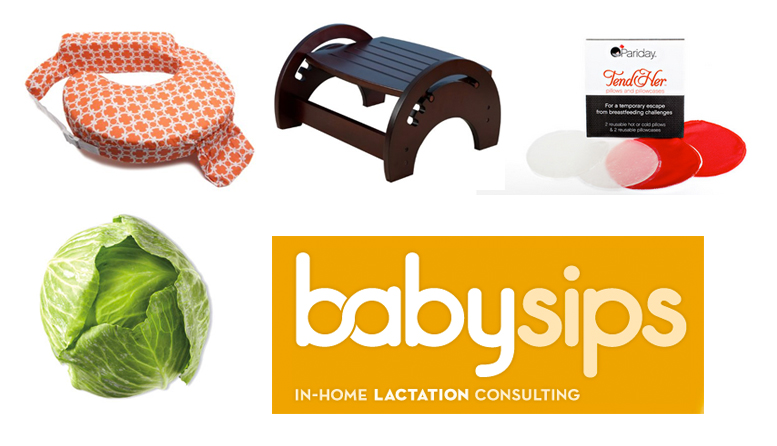
- Nursing Pillows. I’m a huge fan of the My Brest Friend. It gives fantastic lumbar support and gets up nice and close to you. Firm pillow top allows you to use more pillow support and less upper body strength when nursing.
- Nursing Foot Stool. This might seem like a frivolous purchase, but I promise you, the ottoman from the front room will not work. The nursing stool is just a few inches off the ground, usually at the correct angle for your feet and it’s wonderful. It brings your lower back into a neutral position (no back aches, no strain), knees come up a little offering additional support under your MBF pillow. I’ve seen it make a huge difference for many nursing mommas.
- Pariday TendHer Pillows. These are the greatest things since sliced bread. Filled with a non-toxic vegetarian food-based gel inside a deliciously soft safe plastic pouch (BPA + phthalate free), they last for FOUR WEEKS. Not 72 hours. Not 6 days. 4 weeks. And they maintain their “feel good” status the entire time. Use them warm, cold, room temp – it all works. That means less waste and multiple uses! Sore nipples, inflamed areola, plugged ducts, plugged nipple pores, engorgement, headache, cramps, early teething comfort, boo-boos, and more. They come with pillowcases to help wick away milk and prevent leaking on clothing. Once you hold them in your hand they’re hard to put down.
- Green Cabbage for engorgement. You don’t eat it; you WEAR it. Here’s how to use it properly:
- Buy a head of common green cabbage.
- Remove the core and carefully peel individual leaves from the head of cabbage.
- Wash the leaves, pat them dry, and pop them into the fridge – cooling provides more comfort.
- Choose your leaves and roll them with a rolling pin (or a similar object) to break up the fibers.
- Gently place the leaves around the engorgement of your breast (not the areola or nipple), and possibly up into the swollen area under your arms; and wear a light supportive bra (no underwire!) for at least one hour. By this time the leaves should be wilted.
- Discard the wilted leaves.
- Repeat the process every 4-6 hours until the engorgement subsides.
You might feel like a walking salad but it’s better than feeling like a walking zombie!
Why Cabbage? Cabbage has a natural anti-inflammatory effect when used for a short period of time; however, it should not impact your supply if you’re constantly removing milk by nursing or pumping. When using cabbage for an extended period of time, without milk removal or breast stimulation, it can impact your milk supply – consider it a good tool again when you’re ready to wean.
If the road starts to get bumpy, then call for support. If you’re having pain from the start, call for support. If you’re a first time mommy or this is your seventh child, this new baby has never nursed before so be patient while you figure it out together. There’s a bit of a learning curve so have your “village” help with the house, laundry, and cooking, and call your IBCLC. You won’t be sorry.
Want to learn more about breastfeeding? Read Sheridan’s Top Five Tips on How to Prepare for Breastfeeding.
Sheridan Ross is a skilled and compassionate lactation consultant who provides counseling, education and support to moms at every stage. Sheridan is internationally board certified and received her education from UC San Diego and Health e-Learning’s Breast-Ed Series from Australia. She is a member of ILCA (International Lactation Consultants Association), USLCA (United States Lactation Consultants Association), and BALA (Bay Area Lactation Association).
Sheridan has worked as a lactation consultant at Healthy Horizon’s Breastfeeding Center, at the Family Birth Center in Mills-Peninsula Hospital, and is on staff at Bay Area Fertility & Pregnancy Specialists and Pediatrics. She regularly teaches breastfeeding classes, infant massage classes, and hosts support groups. Sheridan’s commitment to infant health and wellbeing extends to her additional roles as a labor doula, certified massage therapist with a focus on prenatal massage, and as a certified instructor of infant massage. For more information, please go to: www.babysips.com or 650-BABYSIPs (650-222-9747).