Archive for the ‘Household Tips’ Category

Nine Naturals Featured in the HCHW “Shop Healthy” Pocket Guide!

Our partner Healthy Child Healthy World has put together a “Shop Healthy” pocket guide featuring trusted brands (including Nine Naturals!) that cover everything from personal care, baby gear to household cleaning. It’s easy, simple, and fits right in your pocket or wallet!

Download it here: http://bit.ly/1eQGob8

Untitled


Nine Naturals Pocket Guide - Download It Now!

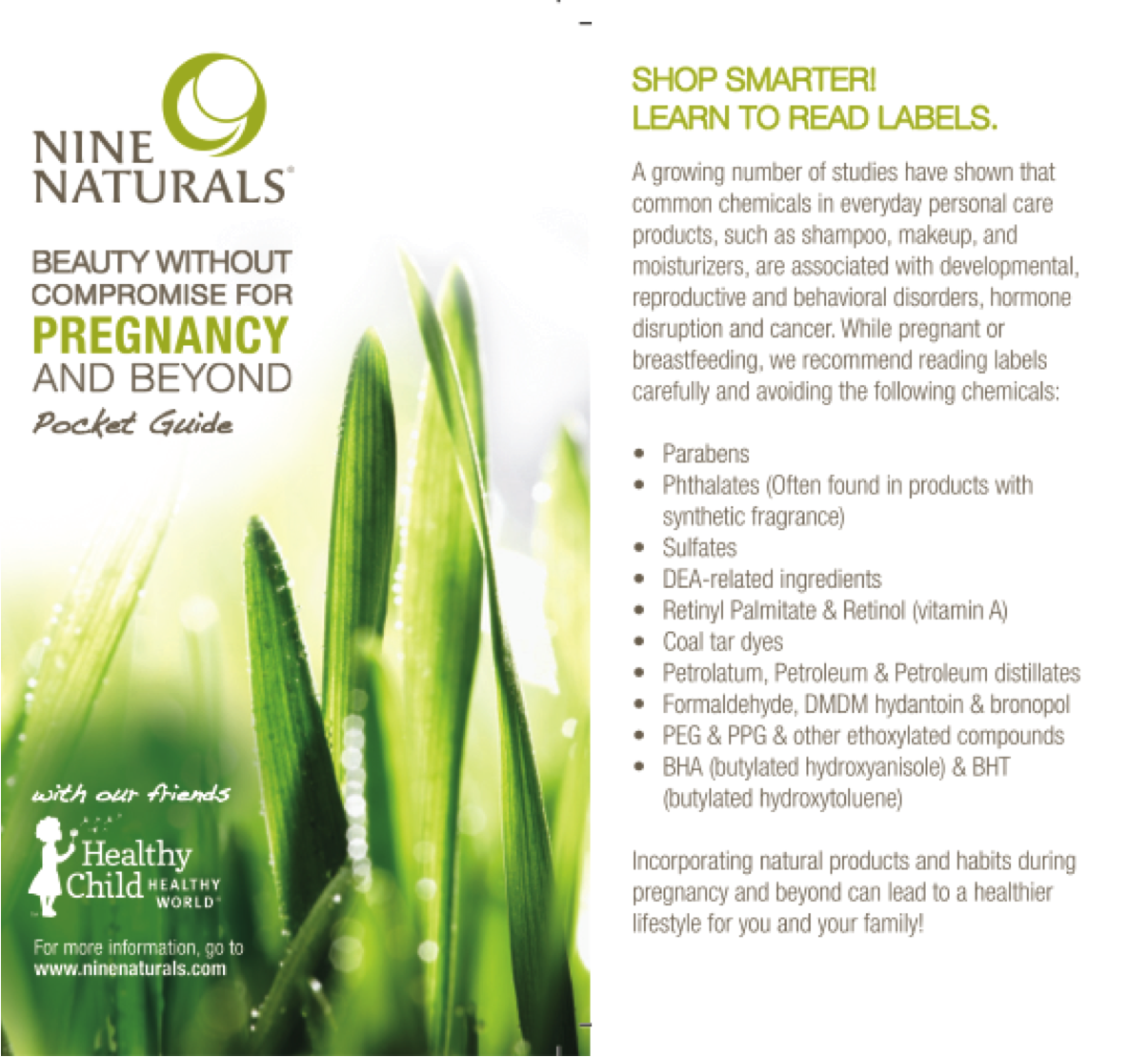
Nine Naturals, with our partner Healthy Child Healthy World, is excited to share our Beauty Without Compromise for Pregnancy and Beyond Pocket Guide on how to live a healthier, toxin free life. Covering beauty, home, and more, the Nine Naturals Pocket Guide is perfect for keeping track of all the information out there - and it fits right in your pocket or wallet!

Click here to Download: Nine Naturals Pocket Guide (Note: Scale to 100% and print double-sided to keep with you when on the go!)

Nine Naturals Pocket Guide


Ten Green Resolutions for 2014!

images

A new year has begun! We turn over a new leaf and welcome another opportunity to break old habits and make real improvements in our lives. Many of us spent 2013 contemplating the switch to a green lifestyle, but didn’t know the best way to start.

Our list of 2014 green resolution tips will help you get started! Follow one, two, or all of our tips, and you’ll notice a great change in the New Year.

  1. Rely on Nine Naturals for a beautifully clean 2014! We are proud to carry 100% all-natural, 100% plant-based products that designed to help pregnant women feel beautiful without compromise. Every Nine Naturals product, from our rich Moisturizing Body Cream to our Mandarin + Ginger Restorative Conditioner, will spoil you and keep you, your baby and our environment safe. Check out our luxurious line today!
  2. Opt for chemical-free cleaning products. Did you know that using traditional cleaning chemicals can create indoor air that is two to three times more polluted than the air outside? In 2013, many organizations around the country, including the state of California, began pushing for regulation on chemicals in common household products. Find a list of eco-friendly cleaning alternatives (some of them right in your kitchen cabinet) in our Greening Your “Clean” Routine article.
  3. Get in on the green nursery trend. In 2014, expect a boom in the number of new parents considering a green sanctuary for their newborn. But as our popular article makes clear, green nurseries are much more than a trend. From the mattress to the crib to the cleaning products to the air filter, they provide an excellent way to secure a baby’s health during her important formative years.
  4. Vow to steer clear of chemicals at the hair salon. Chemical-heavy treatments like hair dyeing and chemical straightening can expose you to damaging chemicals and even carcinogens. We’ve published several articles on great alternatives to these harsh treatments.
  5. Line-dry your laundry. Take advantage of sunny days to let the heat dry your clothes naturally, which can seriously save on both energy and money. Find more tips on greening your laundry with our blogpost here.
  6. Don’t let product labels intimidate you! At first glance, they’re just so darn difficult to read. But toxic chemicals are a reality in any number of commonly used household and cosmetic products and it’s crucial to arm yourself with the knowledge to avoid them. Trust us - you can become a fast expert on deciphering an ingredient list! Check out How to Read a Label to get you started!
  7. Eat organic whenever possible. This resolution can significantly reduce how much you expose your body to harmful chemicals and pesticides through what you eat. But you don’t always have to make the organic choice. The Dirty Dozen are the foods you should always eat organic (like apples and peaches), while the Clean Fifteen (eggplant, kiwi) are fine to eat conventionally. The Environmental Working Group provides a handy list for both.
  8. Ditch the plastic water bottles. This might be the hardest resolution to keep, since plastic bottles are so convenient and widespread. But these bottles often harbor harmful chemicals like bisphenol-A and phthalates and are an albatross on global environmental health.
  9. Instead, choose stainless steel and glass over plastic. These materials do not include the toxic chemicals that plastic containers can. Have no choice but to use plastic, though? Remember this rhyme for your safety: “4, 5, and 2 — all the rest are bad for you!”
  10. Increase your environmental shopping consciousness. Lastly, do what you can to augment your mindfulness of Mother Earth whenever you shop. Examples of how to do it: buy in bulk, and choose the farmer’s market over the grocery store. Bone up on the many ways you can be a greener shopper with the help of our Green Tip article.

Things We’ve Read – Week of December 2nd

Pregnancy

Prenatal Depression: What I Didn’t Expect When I Was Expecting (NYTimes): An enlightening recounting of sadness during pregnancy. Sometimes, placenta doesn’t produce enough progesterone; this offset causes symptoms of depression.

Fertility Doctors Aim To Lower Rate Of Twin Births (NPR): Big multiple births (like Octomom) have decreased but the twin rate is stagnant. Doctors want to lower the rate of twin births and increase the rate of healthy, live births.

The Toxins That Affected Your Great-Grandparents Could Be In Your Genes (Smithsonian): An interesting study of the staying power of toxins finds evidence of hardy and insidious chemicals 4 generations after exposure.

Breathe easy by avoiding chemicals in home items (Philly.com): Is your house off-gassing? Probably. That’s what happens when chemical substances evaporate and get into the indoor air.Screen Shot 2013-12-08 at 2.51.18 PM

Dandruff Shampoo could Mess up Waterways (Scientific American): A study has detected fungicides from anti-dandruff shampoos in the water. They retard the growth of larger plants which offsets the ecosystem and deprives marine animals of food.

Cooking Like a Natural. Safe & Effective Alternatives for Non-Stick Cookware

Screen Shot 2013-12-04 at 6.34.51 PM

It’s the holidays so there’s a lot of cooking happening. Could what we use to cook our food have an impact on our health and the health of our babies? A new study from scientists in Denmark addresses the impact that the use of both non-stick cookware and stain-resistant products can have on women’s health and the health of their babies.

The study focused on the chemical, perfluorooctanoic acid (PFOA), a chemical used in the manufacturing of non-stick and stain-resistant products. Daughters who had high exposure to PFOA in the womb through prenatal exposure from their mothers reported that their first menstrual cycles occurred 5.3 months later than daughters whose mothers were exposed to lower PFOA levels while pregnant. The average age of first menstrual period for all the daughters was 13.2 years of age.

This is not the first study to link PFOA exposure to adverse health effects. Other studies have connected the chemical to cancer, male infertility and low birth weight in newborns. While the definitive connection between PFOA and health outcomes has yet to be finalized and enforced by policy makers, it’s a safe bet to minimize your exposures to PFOA - particularly during pregnancy.

Thankfully, we’ve got some solutions to this ironically sticky situation. Here are our tips for safe and effective alternatives for non-stick cookware:

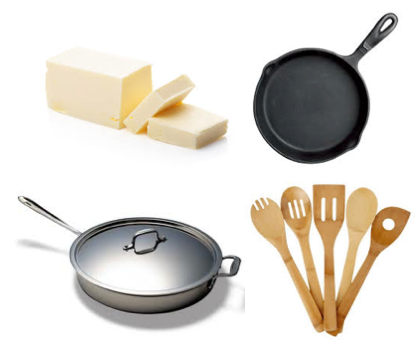
  1. Stainless steel cookware. Professional chefs actually prefer this type of cookware because they do a better job browning and caramelizing foods. Some of the brands that our team uses at our own homes are All-Clad and Demeyere.
  2. Cast iron cookware. Relatively inexpensive, cast iron products also very easy to clean, even without using soap. If you learn to season the cookware properly, the pans will work as well as non-stick. Additionally, cast-iron cookware can be used in the oven, even for broiling. A cast-iron brand we use is Lodge. A more expensive, but beautiful-looking alternative is Le Creuset.
  3. Glass baking dishes. These baking dishes are an excellent alternative to there non-stick counterparts. They cook food evenly and cleanly and also can be used as their own storage containers. Pyrex offers many different shapes and sizes of glass baking dishware. We also love their glass food storage containers as a replacement for plastic containers!
  4. Grapeseed oil or butter. Solve the “stick” problem with a little oil or butter. Organic grapeseed oil in particular has a higher heat capacity than other cooking oils like olive oil and has a more neutral flavor. We love using it for frying eggs in a cast iron pan!

In addition to what you put your food into to cook it, don’t forget also about the utensils you use for stirring and serving! Switch out your plastic utensils for cooking utensils made of natural materials like stainless steel, wood or bamboo. As we’ve mentioned in the past, heat breaks down the chemicals in plastics, so cooking with plastic will allow the chemicals to easily seep into the food you eat.

Do you have any tips on easy cooking without non-stick cookware? Share with us on Facebook!