






Posts Tagged ‘Green Cleaning’

Green Spring Cleaning: 9 Diy Recipes For Natural Cleaners

DIY_cleaning


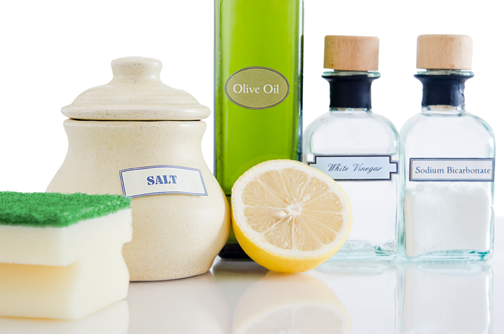
Conventional cleaning products may be loaded with unsafe chemicals (no telling which ones as their formulas are protected as trade secrets…), but fortunately they’re not the only spring cleaning option. Green cleaners made with common natural, non-toxic ingredients are safer and cheaper to use, and they clean just as well. Here are some recipes for green and healthier housekeeping in any season:

1. ALL-PURPOSE CLEANER.
Mix 1/2 teaspoon of washing soda (sodium carbonate), 2 teaspoons of borax**, 1/2 teaspoon of plant-based liquid soap, and two cups of hot water in a spray bottle. Shake well. (**Note that although washing soda and borax are natural minerals, they’re also caustic, and borax is toxic if swallowed. Keep them out of reach of children! If you prefer not to use them, try swapping them out for other natural ingredients. Or just omit.)

2. DISINFECTING CLEANER.
Mix 2 teaspoons **borax, 1/4 teaspoon liquid soap, 4 tablespoons white vinegar, and 3 cups hot water in a spray bottle. If you want to skip the borax, look up a recipe for a hydrogen peroxide-based DIY cleaner.

3. OVEN CLEANER.
Combine 1 cup baking soda and 1/4 cup of **washing soda with enough water to make a paste. Apply to oven surfaces and let sit overnight. Wipe and rinse. If you’d prefer not to use washing soda, try making a paste with only baking soda.

4. TUB & TILE CLEANER
Mix 1 2/3 cups baking soda, 1/2 cup liquid soap and 1/2 cup water. Mix thoroughly then add 2 tablespoons white vinegar. Apply immediately, scrub, and wipe. For a mildly abrasive scouring scrub, just blend baking soda and plant-based liquid soap to your preferred consistency.

5. TOILET BOWL CLEANER.
Dump 1 cup of **borax and 1/4 cup of white vinegar into the bowl. Let sit overnight. In the morning, scrub and flush.

6. FURNITURE POLISH.
Apply a 1:1 blend of olive oil and white vinegar, and polish with a soft cloth.

7. GLASS & WINDOW CLEANER.
Combine a 1:1 mixture of water and white vinegar in a spray bottle. (To remove the waxy build-up left behind by conventional glass cleaners, add 1/2 teaspoon of liquid soap to 1 cup each of water and white vinegar.)

8. MOLD & MILDEW CLEANER.
Mix two cups of water and two teaspoons of tea tree oil in a spray bottle, shake well, spray, and let stand for a few hours before wiping. Hydrogen peroxide will also work.

9. FLOOR CLEANER.
Use 1/4 cup washing soda, 1 tablespoon of liquid soap, 6 tablespoons of cornstarch, 1/4 cup white vinegar, and two gallons of hot water on linoleum and no-wax floors. For wood floors, use 1 cup of vinegar in a bucket of hot water.

This article is courtesy of Healthy Child Healthy World. For the past 20 years, our friends at Healthy Child Healthy World have provided access to critical information that encourages smarter lifestyle choices to reduce toxic chemical exposure in homes and communities to become a trusted resource for parents. Healthy Child’s vision is a world where every child has the opportunity to grow-up in a healthy and safe environment.
Keep Formaldehyde Out Of Indoor Air

Formaldehyde out of Indoor Air


Formaldehyde has been classified as a known human carcinogen by the International Agency for Research on Cancer and as a probable human carcinogen by the U.S. Environmental Protection Agency. It also happens to be a common indoor air pollutant emitted by many of the following: plywood, particleboard, fiberboard; and other pressed-wood products; carpet and carpet glues; paint and floor finish; foam insulation; fiberglass; permanent press clothing and draperies; air fresheners; and even fingernail polish and hardener.

The levels of formaldehyde typically found in indoor air are too low to be smelled but often high enough to cause toxic effects for both children and adults, especially if exposure is ongoing. Short-term exposures can cause allergic skin and mucous membrane reactions, flu-like symptoms, and asthma and other respiratory problems. Formaldehyde has also been linked to nose and throat cancers, and leukemia.

Keeping formaldehyde out of your home’s and your children’s environment is largely a matter of avoiding products that emit it. This can be difficult where construction materials are concerned—it’s often not feasible, for example, to remove existing insulation, carpet or plywood. Formaldehyde emissions from products that contain it, however, generally diminish to negligible or nonexistent levels over time and so are usually only problematic when new.

Here’s how to protect your children and keep your home’s air clear of formaldehyde:

  • Buy only solid-wood products not those made of pressed woods, which can be identified by looking at an unfinished or cut end, or under upholstery. Pressed-woods will look like wood chips, sawdust, or layers glued together.
  • Seal newer unfinished pressed-wood items with formaldehyde-free paint, varnish, or water-based polyurethane sealant.
  • When installing carpet, insist on mechanical methods like tacks instead of glues.
  • Don’t use synthetic air freshening products, especially around your children.
  • Skip the nail polishes and hardeners. (Even formaldehyde-free versions frequently contain other potentially toxic hazards.)
  • Read labels on building products, cleaners, and cosmetics. Look for formaldehyde, urea formaldehyde, or phenol formaldehyde. Be aware that not all products containing formaldehyde will list it on their labels. Consult the manufacturer and use natural alternatives whenever possible as a precaution.
  • Ventilate! Open windows and use fans and air conditioning to reduce formaldehyde concentrations.
  • Wash new clothing and bedding before use to remove fabric finishes. Don’t purchase permanent press or other treated fabrics. Air out new textiles you suspect may be treated for a week before installation in a garage or another covered outdoor spot.

This article is courtesy of Healthy Child Healthy World. For the past 20 years, our friends at Healthy Child Healthy World have provided access to critical information that encourages smarter lifestyle choices to reduce toxic chemical exposure in homes and communities to become a trusted resource for parents. Healthy Child’s vision is a world where every child has the opportunity to grow-up in a healthy and safe environment.